Travel Visa

The Quick Guide to the Laos Travel Visa: Everything You Need to Know

Planning a trip to the Land of a Million Elephants? Excellent choice. Laos is laid-back, beautiful, and packed with culture. But before you can sip coffee in Luang Prabang or swim in the Kuang Si Waterfalls, you need to get past the border. Here is the quick, no-nonsense breakdown of how to handle the Laos Travel Visa. ⚡ At A Glance: The Basics of Laos Travel Visa The 3 Ways to Get Your Visa There are three main ways to get into Laos. Choose the one that fits your travel style. 1. Visa On Arrival (The Most Popular) This is the standard for most backpackers and travelers. You simply fly in or cross a major land border and get the visa right there. If you want to read more about Visa on Arrival CLICK HERE to read The Blog 2. The Official e-Visa (The Planner’s Choice) If you want to skip the paperwork at the airport, you can apply online before you leave home. If you want to read more about Visa on Arrival CLICK HERE to read The Blog 3. Embassy Visa (The Old School Way) You can visit a Lao embassy in your home country or a neighboring country (like Bangkok or Hanoi) to get the sticker in your passport beforehand. ⚠️ Crucial Tip: The “Crisp Dollar” Rule This is the most important tip for Laos travel! When paying for your Visa on Arrival, you must use new, crisp US Dollar bills. Border officials are notoriously strict about the condition of the money. If your bills have: …they will likely reject them. You can usually pay in Thai Baht or Lao Kip as a backup, but the exchange rate they give you will be very poor, costing you significantly more. Can I Extend My Stay? Yes. If you fall in love with the sticky rice and sunsets, you can extend your tourist visa twice, for a maximum of 90 days. You can do this at the Immigration Office in Vientiane or Luang Prabang for roughly $2 USD per day.

American Visa

The American Traveler’s Guide to Laos Visas

So, you’ve done the Thailand beaches and the Angkor Wat sunrise. Now you’re eyeing the map and seeing the landlocked gem of Laos. Good choice. From the French colonial charm of Luang Prabang to the limestone karsts of Vang Vieng, Laos is the laid-back cousin of Southeast Asia. But for American citizens, the question remains: How do we get in? The good news is that despite the geopolitical noise you might hear in the news, obtaining a tourist visa for Laos as a US citizen is still straightforward. 🇺🇸 The Three Options for Americans As an American passport holder, you generally have three ways to get a visa. 1. Visa On Arrival (The Most Popular) Most American backpackers and tourists choose this method. It is simple, requires no advance planning, and is available at all international airports (Vientiane, Luang Prabang, Pakse) and most major land borders (like the Friendship Bridges from Thailand). 2. The eVisa (The “Skip the Line” Option) If you are flying into a major airport or crossing the main Thai-Lao Friendship Bridge (Vientiane-Nong Khai), you can apply online. 3. Embassy Visa Going to the Lao Embassy in Washington D.C. (or a consulate in Bangkok) is rarely necessary unless you plan to enter at a very obscure border crossing that doesn’t issue VOAs, or you are applying for a business/long-term visa. 💵 The “Perfect Dollar” Rule This is the most critical advice for Americans.Lao immigration officers are incredibly strict about the condition of US banknotes. If your $20 bill has a small tear, a pen mark, an ink stamp, or looks too “crinkled,” they will reject it. ⏱️ Duration & Extensions ⚠️ A Note on Current Events (2026) While travel regulations are stable, diplomatic relations can shift. Always check the US State Department website for Laos before you fly. As of early 2026, the border remains open to US tourists, but ensure your passport has at least 2 blank pages available—airlines have been denying boarding to Americans with full passports. Summary Checklist for US Citizens: Passport valid for 6+ months. 2 Physical Passport Photos. $50 USD in pristine, brand-new bills (covers visa + potential overtime fees). Enjoy the sticky rice and waterfalls!

eVisa Check in

eVisa Digital Passports for Tourist’s

If the “Visa On Arrival” is for the spontaneous traveler, the eVisa is for the prepared one. Gone are the days of mailing your physical passport to an embassy and praying it comes back in time. As we settle into 2026, more countries than ever have shifted to digital systems. The eVisa is fast, secure, and—best of all—can be done entirely from your sofa while wearing pajamas. But is it always the best option? And how do you navigate the sometimes confusing world of government portals? Let’s dive in. 💻 What is an eVisa? An Electronic Visa (eVisa) is an official government document that grants you entry into a specific country, but unlike a traditional visa, it is linked electronically to your passport number. There is no sticker, no stamp, and usually no physical paperwork involved until you print out your approval letter (which you should always do, just in case!). You apply online, pay online, and receive your approval via email. 🆚 eVisa vs. Visa On Arrival (VOA) Why pay for an eVisa beforehand if you can just get a Visa On Arrival? 📝 How to Access and Obtain an eVisa The process is generally standardized across the globe now. Here is your step-by-step guide: 1. Find the Official Website Warning: This is where most travelers make mistakes. If you Google “Turkey eVisa,” the first three results are often private agencies that look like government sites but charge you 3x the price. https://www.thaievisa.go.th/ 2. The Application You will need: 3. Payment & Processing Pay the fee using a Visa or Mastercard. Processing times vary wildly: 4. The “Approval Letter” Once approved, you will get a PDF via email Print it out. Even though it is “electronic,” many immigration officers still want to see the paper confirmation, and airlines often require it at check-in. ⚠️ Common Pitfalls (Read Before Applying!) 🚀 Final Verdict If you value peace of mind and hate standing in lines, the eVisa is worth every penny. It takes the stress out of the airport arrival experience, allowing you to grab your bag and start your vacation the moment you land.

Tourist Getting a Visa

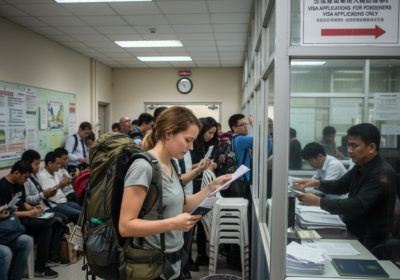
Visa On Arrival 101: The Ultimate Guide for Smart Travelers

Traveling to a new country is exciting, but the paperwork? Not so much. If you’ve ever dreaded the thought of visiting an embassy or mailing your passport away for weeks, I have two beautiful words for you: Visa On Arrival. For many “globetrotters,” the Visa On Arrival (VOA) is a game-changer. It bridges the gap between the hassle of a traditional visa and the freedom of visa-free travel. But how exactly does it work, and what do you need to know before you fly? In this post, we’ll break down why VOA is a traveler’s best friend, how to get one step-by-step, and what it actually costs in some of the world’s most popular destinations for 2025. 🌍 What is a Visa On Arrival? As the name suggests, a Visa On Arrival is a visa that you apply for and receive after you land in your destination country, rather than arranging it weeks in advance from your home country. You simply board your flight with your valid passport, land at the destination airport, and head to a dedicated “Visa On Arrival” counter to get your stamp before passing through immigration. ✅ The Benefits for Foreigners Why should you choose a destination with VOA? Here are the biggest perks: ✈️ How to Access and Obtain a VOA While “On Arrival” sounds easy, you still need to be prepared. You can’t just show up with a smile! Here is the standard process: 1. The Pre-Flight Checklist Before you board, ensure you have: 2. The Airport Process 💰 VOA Costs & Details (2025 Rates) Country Visa Cost (Approx.) Duration Notes Thailand 2,000 THB (~$60 USD) 15 Days Must be paid in Thai Baht. Note: Many nationalities now get a 60-day visa exemption for free, so check eligibility first. Indonesia (Bali) 500,000 IDR (~$35 USD) 30 Days Can be extended once. Note: There is also a separate ~$10 USD tourist levy. Cambodia $30 USD 30 Days Bring exact USD bills. E-visas are available for a similar price to skip the line. Nepal $30 (15 days) / $50 (30 days) 15-90 Days Great value for trekkers. You can pay in major currencies, but USD is safest. Egypt $25 USD 30 Days Strictly cash in USD. Pro Tip: If visiting Sinai (Sharm El Sheikh) only, you may get a free 15-day stamp. Jordan 40 JOD (~$56 USD) 30 Days Pro Tip: Buy the “Jordan Pass” online beforehand; it includes your visa fee and entry to Petra. Maldives FREE 30 Days A rare gem! No visa fee for tourists, just a simple arrival form.

Login