
Chiang Rai to Luang Prabang: The Ultimate 2026 Travel Guide

Traveling from Chiang Rai to Luang Prabang is a true Southeast Asian bucket-list adventure. However, moving from the mountains of Northern Thailand to the UNESCO World Heritage city in Laos means navigating border crossings and rugged terrain, which can quickly become overwhelming.
For years, this classic journey meant committing to a multi-day river cruise or a grueling bus ride. Today, the travel landscape has completely transformed. Whether you are a backpacker on a strict budget, a vacationer short on time, or a traveler seeking the traditional Mekong River experience, there are now three distinct ways to make the crossing.
To help you plan the perfect trip, we have broken down the three main transport options for your Chiang Rai to Luang Prabang itinerary:
- The Hybrid Train Route: The newest, fastest, and most comfortable option, utilizing the modern Laos-China Railway to cut travel time down to a single day.
- The Classic Slow Boat: The legendary, incredibly scenic two-day voyage down the Mekong River, perfect for those who believe the journey is the destination.
- The Overnight Sleeper Bus: The direct, budget-friendly choice that saves you a night of hotel accommodation by driving through the mountains while you sleep.
Read on to discover the exact routes, pros, cons, and insider tips for each option so you can confidently choose the one that perfectly fits your travel style and schedule.
Train from Chiang Rai to Luang Prabang
For decades, the journey between Northern Thailand and the spiritual heart of Laos was a notorious test of endurance. Backpackers and vacationers alike had to choose between a scenic but exhausting two-day slow boat down the Mekong River, or a nauseating, bone-rattling 14-hour bus ride through winding mountain passes.
But in 2026, everything has changed for the better. You can now travel from Chiang Rai to Luang Prabang utilizing the cutting-edge Laos-China Railway (LCR). While there is no direct train station in Chiang Rai itself, this seamless “Hybrid Route” (a well-coordinated combination of van transfers and high-speed train) has quickly become the modern traveler’s premier choice for speed, safety, and unmatched comfort.
Whether you are on a tight holiday schedule or simply want to avoid the infamous mountain roads, here is everything you need to know about navigating the hybrid train route from Chiang Rai to Luang Prabang.
How the “Hybrid Train” Route Works
Since the high-speed railway network is exclusively located on the Laotian side of the border, you cannot hop on a train directly in Chiang Rai. Instead, the trip is efficiently split into two distinct legs, combining overland driving with the new rail system:
Leg 1: The Border Crossing
- Transport: Private Van or Minibus.
- Route: Chiang Rai
->Chiang Khong (Thai Border)->Huay Xai (Laos Border)->Nateuy Train Station. - Time: Approx. 4–5 hours.
- Details: You will typically depart Chiang Rai early in the morning in a comfortable air-conditioned van. The drive takes you to the border town of Chiang Khong, where you will cross the Mekong River via Friendship Bridge 4. After completing your Thai exit stamps and securing your Laos Visa on Arrival in Huay Xai, another private van will transport you through the lush, hilly landscapes of Northern Laos straight to the Nateuy Train Station, which is the most convenient boarding point near the border.
Leg 2: The High-Speed Train
- Transport: LCR High-Speed Train (EMU).
- Route: Nateuy Station
->Luang Prabang Station. - Time: Approx. 1 hour 15 minutes.
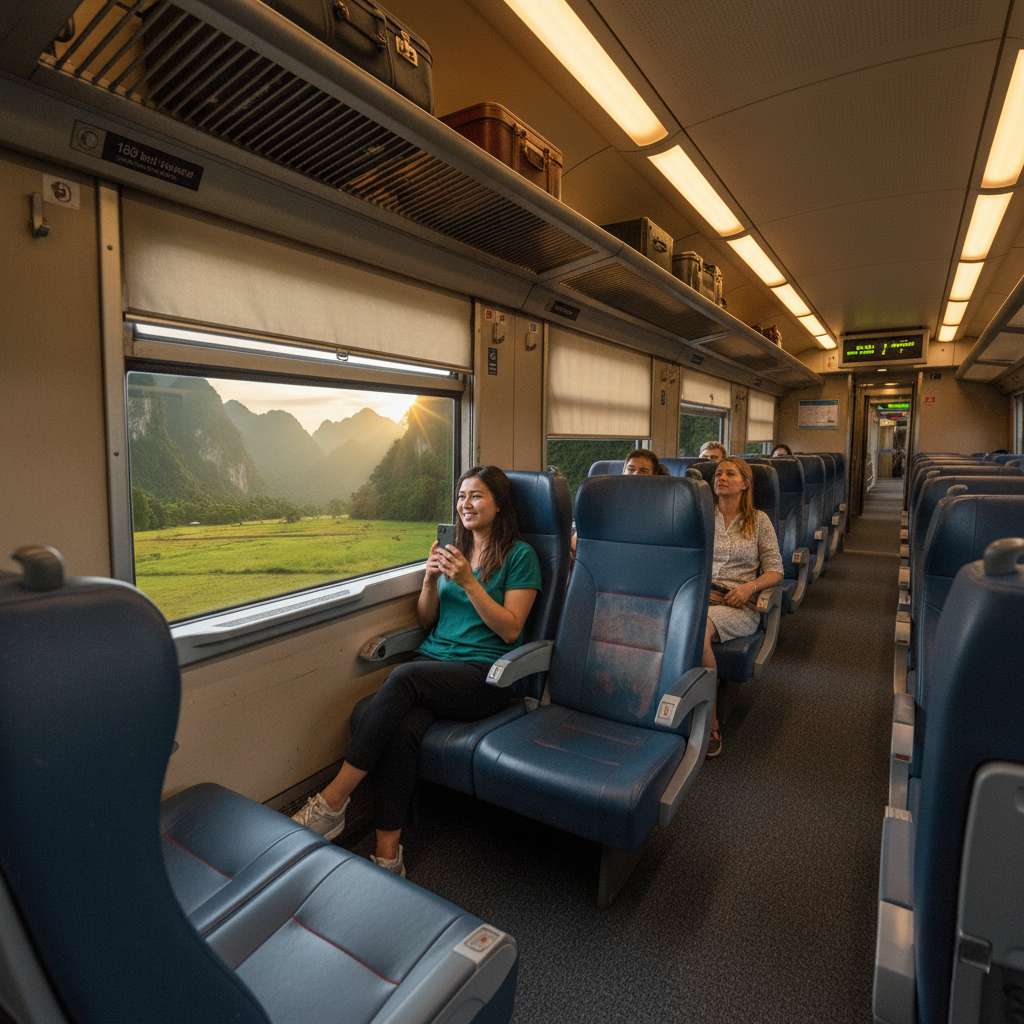
- Details: Once you clear security and board the sleek train, you can finally sit back and relax. The journey from Nateuy to Luang Prabang takes just over an hour—a miraculous feat considering the rugged terrain outside. It is a remarkably smooth, whisper-quiet, and fully air-conditioned ride that glides through dozens of newly blasted mountain tunnels and over elevated bridges, depositing you in Luang Prabang just in time for an afternoon coffee.
Advantages of the Train from Chiang Rai to Luang Prabang
Why are so many travelers eagerly switching from the traditional boat or bus to the train? Here are the main benefits of choosing the rail option for your Chiang Rai to Luang Prabang trip:
- It is Significantly Faster: The total travel time, including all border transfers and waiting periods, is roughly 7–9 hours. Compare that to the two full days required for the slow boat, and you essentially gain an extra day of sightseeing in Laos.
- Zero Motion Sickness: The roads in Northern Laos are notoriously winding, potholed, and steep. The train bypasses all of this by cutting straight through the mountains via tunnels, offering a stable, turbulence-free ride that is perfect for travelers with sensitive stomachs.
- Modern Comfort and Amenities: The LCR trains are state-of-the-art. You can expect spacious seating with ample legroom, impeccably clean western-style toilets, charging ports conveniently located under the seats, and powerful air conditioning to beat the tropical heat.
- Unique Scenery: While you might miss the close-up river views of the slow boat, the train offers stunning, panoramic glimpses of untouched limestone karsts, deep valleys, and high-altitude bridges that you simply cannot see from the standard roadways.
Disadvantages of the Train Route
While it is an incredible feat of engineering, this route isn’t completely without its quirks. Here are a few downsides to consider before booking:
Strict Airport-Style Security: The train security is incredibly thorough. No knives, multi-tools, flammable aerosols, or pressurized sprays are allowed in your carry-on or checked bags. Be warned: even everyday items like aerosol bug spray or certain cosmetics are frequently confiscated at the scanners.
Multiple Vehicle Transfers: You will have to switch vehicles several times throughout the day (Van -> Border Immigration Bus -> Laos Van -> Train). This means hauling your luggage in and out of vehicles, making it a bit less “sit back and do nothing” than the direct slow boat.
Station Location in Luang Prabang: The train station in Luang Prabang is located about 15km outside the historic city center. When you arrive, you will need to pay for a shared minivan (typically around 25,000–35,000 Kip per person) to get to your hotel, adding a small extra step to your journey.
Ticket Availability and Booking: Train tickets in Laos are in incredibly high demand and often sell out days in advance to tour groups. Buying tickets at the station yourself can be risky, chaotic, and leaves you vulnerable to being stranded if the train is full.
Tips and Tricks for a Smooth Journey
If you decide to take the fast track from Chiang Rai to Luang Prabang, use these expert tips to ensure a stress-free experience:
- Book a Combo Package: Do not try to wing this DIY-style on the same day. The timing between the border crossing and the train departure can be tight; if you miss the van transfer, you will miss the train. We highly recommend booking a combo ticket that handles the van logistics, border assistance, and secures your pre-booked train ticket well in advance.
- Pack Light and Smart for Security: Because of the strict baggage checks mentioned earlier, double-check your toiletry bag. Leave expensive lighters, large scissors, and pressurized spray cans behind, or they will end up in the station’s trash bin.
- Arrive Early at the Station: Unlike many European or Thai trains where you can hop on two minutes before departure, you need to be at the Laos train station 45–60 minutes prior to departure. You will need this time to clear the security screening lines and get your ticket verified.
- Bring Your Own Snacks: While the train ride itself is short, the food options at Nateuy station are currently quite limited. Do yourself a favor and stock up on snacks and drinks from a 7-Eleven on the Thai side before you cross the border.

Train from Chiang Rai to Luang Prabang
Slow Boat from Chiang Rai to Luang Prabang
While the new high-speed railway offers unmatched efficiency, the traditional slow boat down the Mekong River remains a quintessential Southeast Asian rite of passage. For those who believe the journey is just as important as the destination, the two-day slow boat from Chiang Rai to Luang Prabang is an unforgettable, deeply scenic adventure.
Rather than rushing through tunnels in the dark, the slow boat allows you to witness the authentic, slow-paced rhythm of river life in Northern Laos. If you have a flexible itinerary and want to soak in the untouched jungle landscapes, here is exactly how the classic slow boat route operates.
How the “Slow Boat” Route Works
Unlike the train, the slow boat is a multi-day journey that requires an overnight stop in the remote riverside village of Pakbeng. The trip breaks down into three main stages:
Stage 1: The Border Crossing (Morning of Day 1)
- Transport: Private Van or Minibus.
- Route: Chiang Rai
->Chiang Khong->Huay Xai (Laos Border). - Details: You will be picked up from your accommodation in Chiang Rai early in the morning. After a roughly two-hour drive to the Chiang Khong border, you will cross Friendship Bridge 4, complete your Laos Visa on Arrival in Huay Xai, and transfer directly to the slow boat pier.
Stage 2: Cruising to Pakbeng (Afternoon of Day 1)
- Transport: Traditional Wooden Slow Boat.
- Route: Huay Xai
->Pakbeng. - Time: Approx. 6 to 7 hours on the water.
- Details: You will board the long, open-air wooden boat late in the morning. The afternoon is spent drifting past dramatic limestone cliffs, dense jungle canopies, and small fishing villages. The boat docks in the late afternoon in Pakbeng, a small town dedicated almost entirely to hosting slow boat travelers for the night. You will need to book a local guesthouse for the evening.
Stage 3: Arrival in Luang Prabang (Day 2)
- Transport: Traditional Wooden Slow Boat.
- Route: Pakbeng
->Luang Prabang. - Time: Approx. 7 to 8 hours on the water.
- Details: You re-board the boat in the morning for the second leg of the journey. The river widens, the scenery shifts, and you will eventually arrive at the Luang Prabang slow boat pier (usually located about 10km outside the main city center) by late afternoon, perfectly timed for a sunset stroll or a visit to the night market.
Advantages of the Slow Boat from Chiang Rai to Luang Prabang
For decades, this has been the most famous border crossing in Southeast Asia. Here is why the slow boat remains incredibly popular:
- Unbeatable Scenery: The Mekong River is the lifeblood of Laos. The slow boat gives you a front-row seat to pristine nature, wild elephants (if you are lucky!), water buffalo, and remote villages that are completely inaccessible by road.
- A Social Experience: If you are a solo traveler or looking to make friends, the slow boat is legendary for its social atmosphere. You have two days to share stories, play cards, and grab a Beerlao with fellow travelers from around the globe.
- Relaxing Pace: There is no Wi-Fi and cell service is spotty at best. It is a rare opportunity to unplug, read a book, take a nap, and truly disconnect from the modern world.
Disadvantages of the Slow Boat
While romantic, the slow boat is a rugged travel experience. Keep these downsides in mind:
It Takes Two Full Days: If your vacation time is limited, dedicating two whole days just to transit might eat up too much of your itinerary.
Basic Comfort Levels: These are not luxury cruisers. While many boats have repurposed car seats for passengers, space can be tight, it can get hot in the afternoon sun, and the engine noise at the back of the boat is quite loud.
The Pakbeng Stopover: You are forced to unpack and repack for a one-night stay in Pakbeng. While charming in its own way, the town exists purely as a transit hub, and the guesthouses are generally very basic.
Tips and Tricks for a Comfortable Slow Boat Journey
To make your two-day voyage from Chiang Rai to Luang Prabang as enjoyable as possible, pack these insider tips:
- Bring a Travel Pillow and Blanket: The mornings on the river can be shockingly chilly, especially between November and February. A blanket and a neck pillow will make reading or napping infinitely more comfortable.
- Stock Up on Snacks: While the boats usually sell basic instant noodles, chips, and drinks, you will want more substantial food. Buy sandwiches and fresh fruit in Chiang Khong or Huay Xai before boarding.
- Sit Toward the Front: The massive diesel engines powering the boat are located at the back. Try to grab a seat closer to the front or middle of the boat to escape the noise and the exhaust fumes.
- Book a Seamless Package: Navigating the border crossing, securing tuk-tuks to the pier, and haggling for boat tickets on the spot can be overwhelming and often leads to overpaying. Booking an all-inclusive combo ticket takes all the guesswork out of the logistics.

Slowboat from Chiang Rai to Luang Prabang
The bus route from Chiang Rai to Luang Prabang
If the high-speed train is sold out or the slow boat takes too much time out of your itinerary, the overland sleeper bus remains a steadfast option for budget-conscious backpackers. Taking the overnight bus from Chiang Rai to Luang Prabang is the most direct, economical way to travel between the two cities without paying for an extra night of hotel accommodation.
While it is certainly an endurance test compared to the modern railway, the sleeper bus drops you right in the heart of Luang Prabang by sunrise. Here is what you need to know about navigating the overnight bus route.
How the “Sleeper Bus” Route Works
Because there is no direct, single-bus service that goes all the way from Chiang Rai city center into Laos, the journey is broken into a daytime border crossing followed by an overnight haul:
Stage 1: Reaching the Border (Afternoon)
- Transport: Local Bus or Private Van.
- Route: Chiang Rai
->Chiang Khong (Thai Border)->Huay Xai (Laos Border). - Details: Your journey begins in the early afternoon. You will take a van or a local red bus from Chiang Rai to the border town of Chiang Khong. After clearing Thai immigration at Friendship Bridge 4 and crossing the Mekong River, you will get your Laos Visa on Arrival in Huay Xai. From there, a tuk-tuk will transfer you to the local Bokeo bus station to await your evening departure.
Stage 2: The Overnight Journey (Evening to Morning)
- Transport: VIP Sleeper Bus.
- Route: Huay Xai
->Luang Prabang (Naluang Station). - Time: Approx. 12 to 14 hours on the bus.
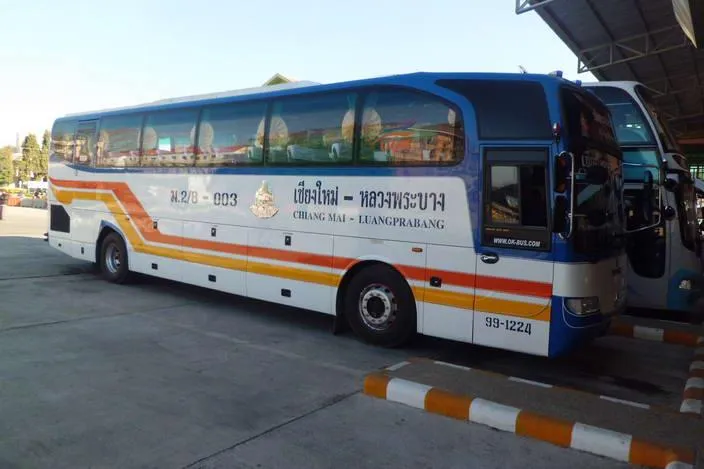
- Details: The sleeper buses typically depart Huay Xai between 4:00 PM and 6:00 PM. Instead of traditional seats, these buses feature fully flat, bunk-style beds. The bus winds its way through the mountainous terrain of Northern Laos through the night, making a few brief stops for food and bathroom breaks. You will arrive at the Southern Bus Terminal in Luang Prabang early the next morning, usually around 6:00 AM or 7:00 AM.
Advantages of the Bus from Chiang Rai to Luang Prabang
Despite the introduction of the train, many travelers still opt for the overnight bus for a few key reasons:
- Highly Cost-Effective: This is generally the cheapest way to make the crossing. Plus, because you are sleeping on the bus, you instantly save the cost of a night’s hotel accommodation.
- Time Efficiency: Unlike the slow boat, which eats up two full days of your vacation time, the bus does all the heavy lifting overnight while you sleep, allowing you to wake up ready to explore Luang Prabang.
- Direct Travel: Once you are on the sleeper bus in Huay Xai, you do not need to worry about changing vehicles, moving your luggage, or managing any more transit connections until you arrive.
Disadvantages of the Bus Route
The sleeper bus is an adventure, but it requires a certain level of physical tolerance. Consider these factors:
The Winding Roads: The mountain highways in Northern Laos are notoriously steep, bumpy, and full of hairpin turns. If you are prone to motion sickness, trying to sleep while the bus sways side-to-side can be incredibly difficult.
Shared and Cramped Beds: “VIP Sleeper” beds in Laos are often designed for two people to share. If you are traveling solo, you might be assigned a bed next to a stranger. Additionally, if you are taller than 1.8 meters (5’11”), you will likely find the beds too short to stretch out fully.
Unpredictable Delays: Potholes, heavy rain, or minor mechanical issues can easily add an extra hour or two to your journey. You need to approach the arrival time with a flexible mindset.
Tips and Tricks for Surviving the Sleeper Bus from Chiang Rai to Luang Prabang
If you are ready to tackle the overnight drive from Chiang Rai to Luang Prabang, these tips will make the ride vastly more comfortable:
- Pack Warm Layers: The air conditioning on Southeast Asian sleeper buses is famously set to freezing. While a thin blanket is usually provided, wearing long pants, socks, and a hoodie is highly recommended.
- Bring Motion Sickness Medication: Even if you don’t usually get car sick, the Laotian mountain roads are unforgiving. Take a motion sickness pill 30 minutes before the bus departs Huay Xai.
- Earplugs and an Eye Mask: The bus will make several stops during the night, and the driver may leave the music playing or turn the cabin lights on. An eye mask and noise-canceling earplugs are essential for getting any real rest.
- Secure Your Valuables: Keep your passport, phone, and wallet in a small day bag securely tucked in bed with you, rather than stowed underneath the bus or by your feet.
Slowboat from Chiang Rai to Luang Prabang